Carlos L. Araya, Ph.D.
Science, Technology, & Impact


Introduction
I am a scientist, technologist, and entrepreneur dedicated to building foundational capabilities for healthcare, biotechnology, and life sciences. I was the cofounder and CEO of Jungla Inc., a venture-backed life sciences startup acquired by Invitae (NVTA), later LabCorp (LH). Previously, I was a postdoctoral researcher at Stanford University and hold a Ph.D. in Genome Sciences from the University of Washington.
A brief synopsis of my work is provided below; a full list of scientific publications is available here.
NewCo Inc. (Stealth)
More coming soon…
Tapanti.org (Fund)
I am an advisor to the Tapanti Philanthropic Fund, which was founded in 2020 to support global efforts in education and health, planetary and human.
Invitae Corp. (Acquired)
Invitae Corp. (a LabCorp company) is a San Francisco-based biotechnology company focused on delivering comprehensive genetic information into mainstream medicine globally. Following the acquisition of Jungla Inc., I transitioned to the role of Head of Scientific Modeling for a newly-formed division within Invitae (NVTA;LH). In this capacity, I oversaw the integration and expansion of a scientific evidence platform into clinical genetic testing, delivering markedly improved results to millions of patients.
—
You can learn more about this work here, here, and here.
Jungla Inc. (Acquired)
Following years of technology advances in academia, I and two colleagues set out to bring these and further developments to bear on clinical testing. In 2017, I became cofounder and CEO of Jungla Inc., a biotechnology start-up focused on enabling robust, quantitative, and scalable clinical genetics. Jungla Inc. brought together a diversity of scientific, engineering, and clinical disciplines to deliver a computational and cellular learning engine for genetic testing. As Chief Executive Officer (CEO), I oversaw corporate, technological, and commercial development, from founding and capitalization (i.e., Andreessen Horowitz, SOSV) to its acquisition in 2019 by Invitae Corp (NVTA; LH). Jungla Inc. was the result of a small but fierce, driven team of scientists and engineers focused on delivering on a mission. I consider Jungla Inc.’s success was to enable the transition to quantitative, model-driven clinical genetics. Today, these transition has enhanced results for >5 Million patient tests.
—
You may find more about Jungla Inc. here and here.
Stanford University (Post-Doc)
In 2011, I joined Stanford Genetics as a post-doctoral researcher where I was co-mentored by Michael Snyder and Will Greenleaf. These labs afforded very different opportunities. The first offered the possibility to engage and direct a large consortium of international scientists (ENCODE), where I led research culminating in back-to-back first-author publications in Nature. The second offered the opportunity to work closely with brilliant and energetic scientists on frontier technologies combining biophysics, genomics, and computation. We performed what reviewers would ultimately refer to as a "tour-de-force in technology development" adapting a high-throughput sequencing platform for quantitative, high-throughput biophysical assays (e.g., binding). Ultimately published and featured on the cover of Nature Biotechnology, this work resulted in what was then the largest biophysical assay to-date, quantitively measuring binding affinities (i.e, ∆∆Gs) and kinetics for ~10 Million RNA-protein interactions.
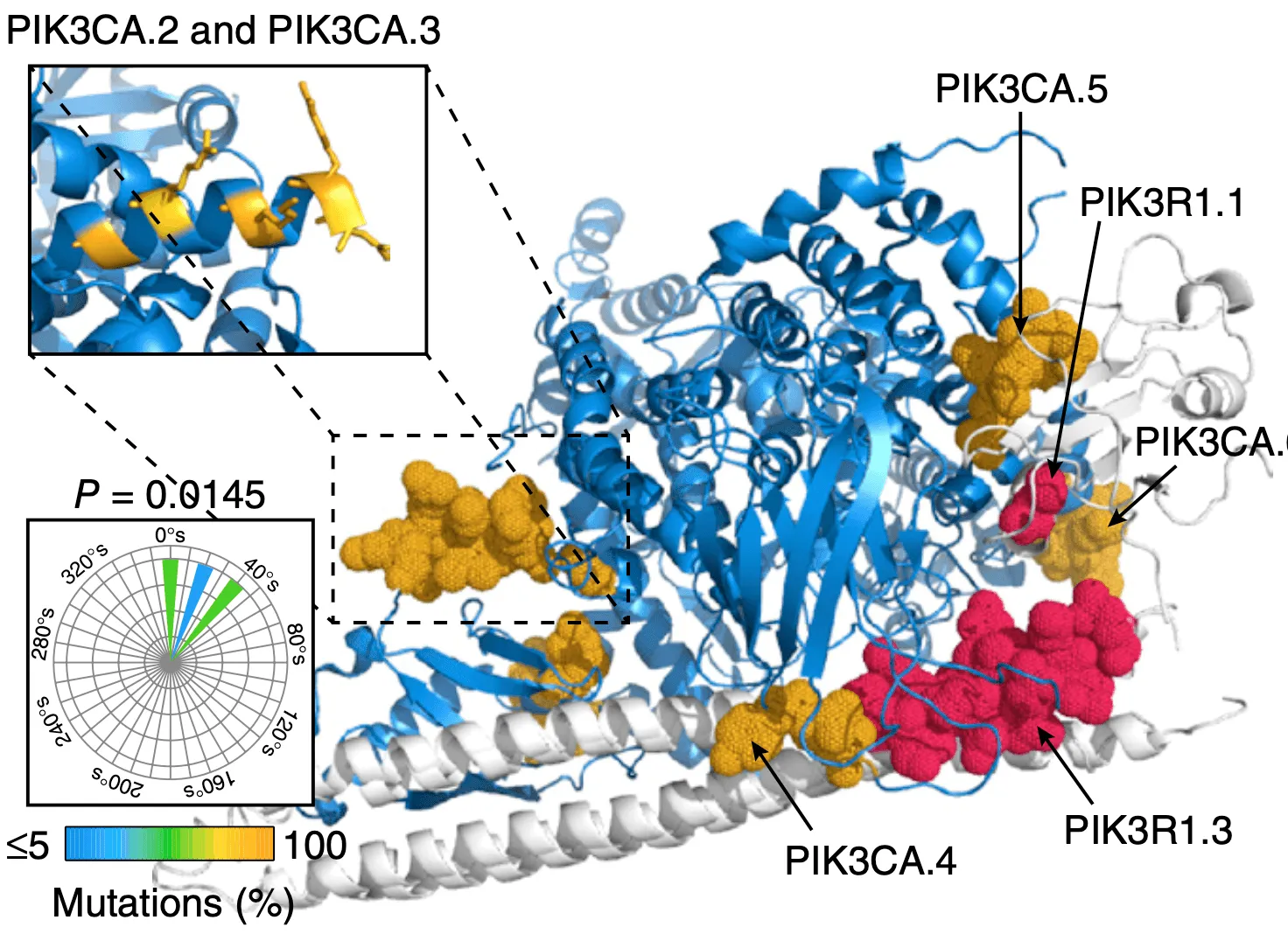
Further convinced of the power of combining biophysical insights and genomic technologies, and once again with a new team of stellar scientists —I'm looking at you Can Cenik, Jason Reuter, and Gert Kiss— we carried out an in-depth discovery study of cancer-driver mutations published in Nature Genetics.
University of Washington (Ph.D.)
Between 2004-2010, I was a graduate student in Genome Sciences (Ph.D.) at the University of Washington in 2004. Here I had the fortune to train alongside driven, rigorous, creative and kind young and senior scientists. Among the many talented individuals, I would highlight the mentorship of Stanley (Stan) Fields, Douglas Fowler, Lea Starita, and Jay Hesselberth. These mentors and friends have had an outsized impact on me professionally and personally.
In particular, I would highlight the impact of Stanley Fields, an HHMI researcher who took the cause for creative, disruptive exploration seriously. As a young graduate student, Stan gave me one of the greatest gifts: the freedom to fail. And that I did for many years, until 2008/2009, when I proposed together with Douglas Fowler that we develop a new method —now termed Deep Mutational Scanning— that has allowed scaling assays of protein and molecular function several orders of magnitude. Now a staple of protein and molecular science, >6,000 publications have applied, reviewed, or cited Deep Mutational Scanning, and it is part of the backbone that today guides diagnostics (e.g., genetic testing), therapeutics (e.g., antibodies), and manufacturing (e.g., novel enzymes).
Readings (Recommended)
What is a good quest? Below is a short, curated selection of materials that I have found to be deeply insightful and significant. I would encourage anyone seeking to make the most of their lives to read these.
- >> How To Do Great Work (Paul Graham)
- >> The Structure of Scientific Revolutions (T. Kuhn)
- >> The Creative Act (Rick Rubin)
- >> The Almanack of Naval Ravikant (E. Jorgenson)
- >> The Way to Love (Anthony de Mello)
I believe both fiction† and non-fiction†† extend our empathy (e.g., with current struggles) and view (e.g., of possible futures).
“We need more science fiction about improving agriculture, inventing artificial wombs, preventing pandemics, repairing the educational system for children, and keeping our ice caps from melting. All of these are examples of big stuff that needs to be done. And science is helping in big and small ways with all of them. We await the stories that will unite us in a passionate quest to make them happen.”